


By Madisen Carter, Intern
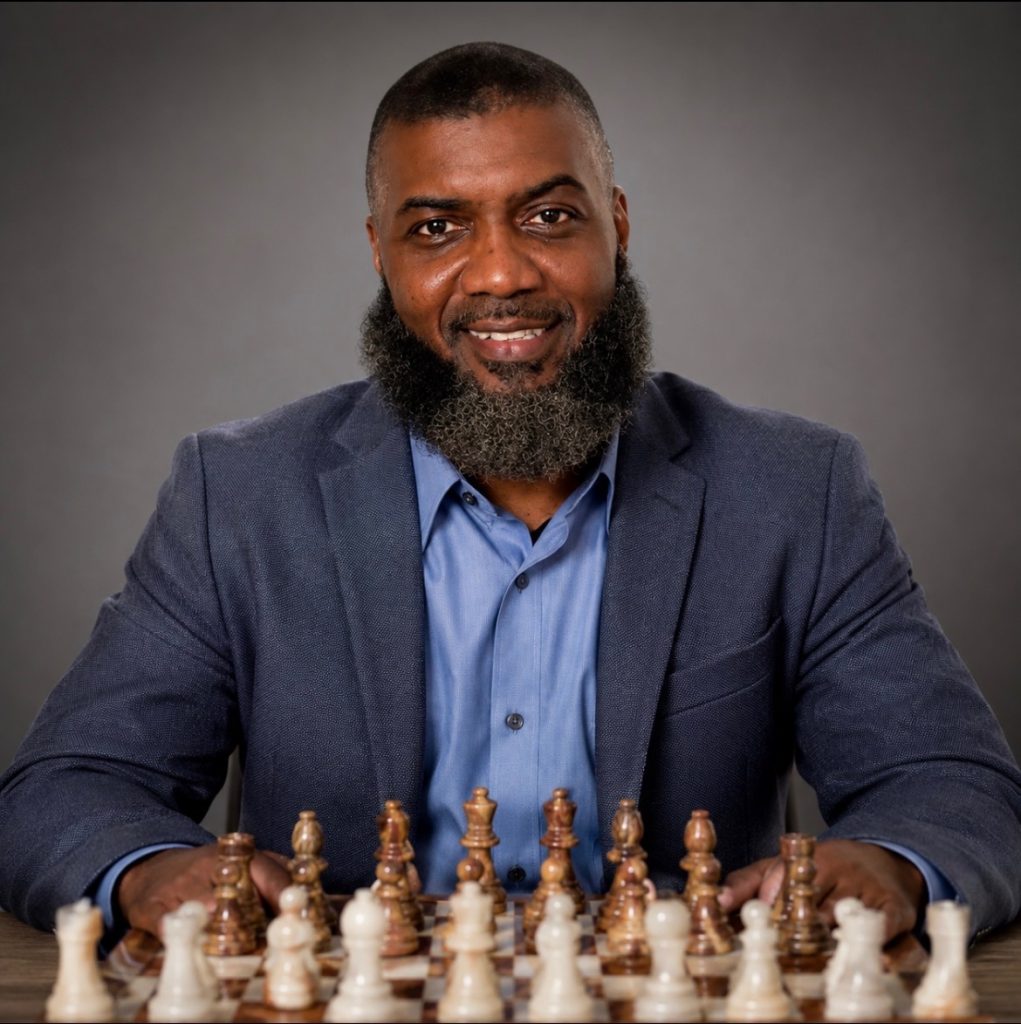
For Jamal Young, Get It Off Your CHESS is more than a chess program. It is a mission rooted in loss, resilience and the belief that young people can be taught to think before reacting. Young was inspired to create the organization after losing his son to gun violence in September 2015. The tragedy prompted him to find a way to help young people make better decisions and potentially prevent other families from experiencing the same kind of loss.
“I decided to try to do something that would prevent kids from being so violent and make them think before they react,” Young said.
Chess became the foundation for that mission. Young grew up playing the game with his uncle, who used chess as an outlet to keep him and other children from fighting in their neighborhood.
As an adult, Young continued that tradition with his own children and eventually began sharing the game with young people in the community.
The name Get It Off Your CHESS carries a meaning beyond the game itself. Young describes it as a way for people to release the pressure they carry, clear their minds and deal with situations instead of allowing emotions to build up.
For Young, one of the biggest lessons chess teaches is simple: slow down and think before you act.
“Just take that one second to think about what’s really going on before you react,” he said. He believes that a moment of thought can make a significant difference when someone is angry, frustrated or facing conflict. Rather than immediately responding through violence or aggression, chess encourages players to consider their options and the consequences of every move.
Those lessons extend beyond the chessboard. Young teaches children patience, communication, critical thinking and decision-making. He also uses the chess pieces to help students connect the game to real-life situations.
A pawn can represent friends or people surrounding you. The king or queen can represent the individual making decisions. Other pieces can represent family, home and the people who influence a person’s life.
By connecting chess to situations students recognize, Young hopes they begin to understand that every decision has a consequence, much like every move on a chessboard affects what happens next.
Young says he has received positive feedback about the students participating in his programs. He has seen reports of increased participation in school, greater confidence and students beginning to take on more leadership roles.
He also emphasizes that chess provides an opportunity for young people who may not see themselves as athletes. Young believes parents and communities should encourage children to explore interests beyond sports, including chess, music and the arts. He sees those activities as opportunities for children to discover talents and careers they may not otherwise consider.
“Some of us are not athletes,” Young said. “Some of us are not going to be able to walk in a straight line and chew bubblegum. But at the same time, we all can think and learn something.”
Looking toward the future, Young hopes to expand Get It Off Your CHESS into more Montgomery schools and eventually establish his own chess academy where students from kindergarten through college can learn and develop through the game.
Ultimately, however, Young’s goal goes far beyond teaching chess.
For a young person struggling with conflict, he encourages them to slow down, pray, talk to someone and avoid keeping their emotions bottled up.
“Don’t just hold it in,” Young said. “Just settle down and really see it like you need to see it.”
His motivation remains deeply personal. After experiencing the loss of his son, Young wants to prevent other families from experiencing the same pain.
“I really want to save others,” he said. “Nonviolence is the way to go.”
Through Get It Off Your CHESS, Young hopes to give young people another choice: pause, think, make your move—and choose a better one.
All rights reserved, Gumptown Magazine, LLC. Copyright 2026.
