


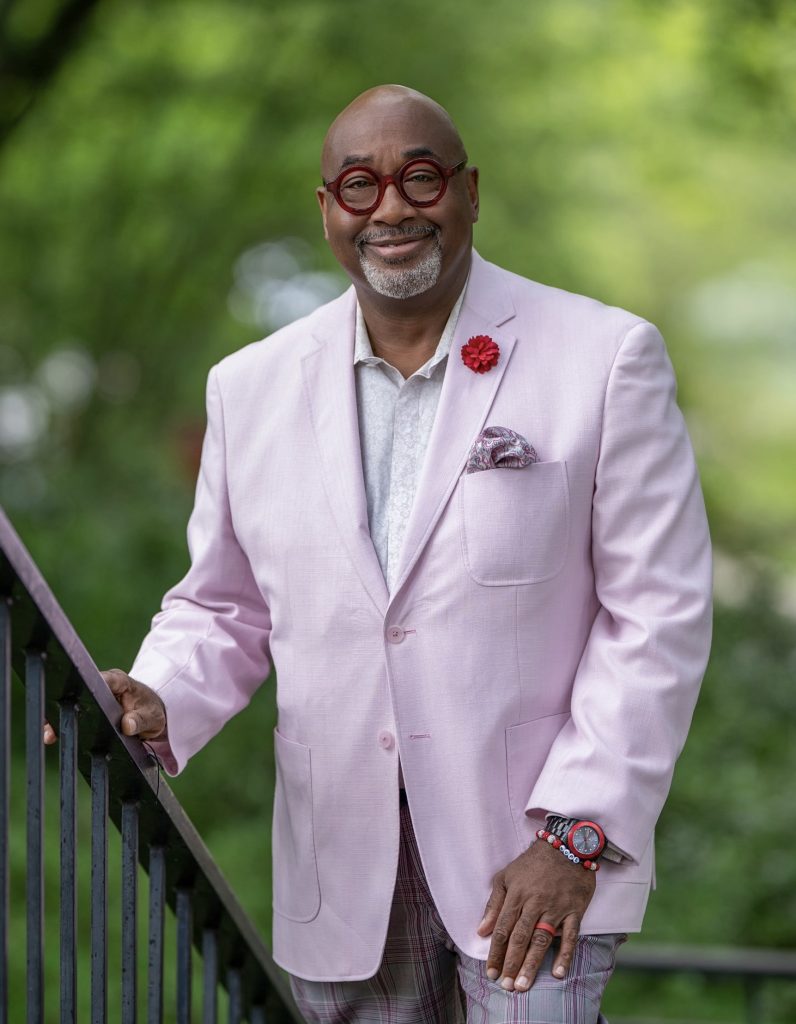
By Jamal Thomas
Birmingham, AL- Valton Johnson describes himself as a man who loves children and wants to see them excel whenever they are given an opportunity. His work brings together his faith, passion for the arts and commitment to helping young people build brighter futures.
With a degree in pastoral theology, a master’s certificate in acting, voice and modeling, and an honorary doctorate recognizing his work in film, Johnson has developed a unique approach to ministry and mentorship. Through his production company, Cinematic Creations Agency, he teaches young people that the entertainment industry is not simply about being in front of the camera. It is an expansive world filled with opportunities for writers, directors, producers, actors, electricians, set builders, costume designers, cinematographers and many others.
His journey into filmmaking began unexpectedly—with a sermon.
Johnson says the connection between preaching and filmmaking became clear through the word “script.” Just as a preacher takes Scripture and develops a message, filmmakers take a script and transform words into stories that audiences can see and experience.
That connection eventually led him into the world of film and, ultimately, into youth filmmaking camps designed to help children discover their own voices.
Johnson’s philosophy is straightforward: “Put a camera in students’ hands so that they will not pick up a gun. Shoot a movie, not a gun.”
For Johnson, the message is not about discouraging young people from participating in sports. Rather, it is about expanding their understanding of what is possible.
He points to the limited number of athletes who ultimately reach the professional level and contrasts that with the many opportunities available within the film industry. On a movie set, he says, there is room for an entire team of people with different interests, talents and skills.
A young person who does not want to act can write. Someone who loves building can learn set construction. A student interested in technology can explore cameras, lighting or electrical work. Others can pursue costume design, poetry, comedy, dance or production.
The possibilities are endless.
Johnson believes many children simply need someone to come into their communities and show them that these opportunities exist.
That is the purpose behind his film camps.
Over the past six years, Johnson says his organization has hosted 29 film camps and reached more than 3,000 students. His programs have worked with Birmingham City Schools, Jefferson County Schools and Huntsville City Schools, with plans to expand into additional Alabama communities, including Montgomery, Mobile and Tuscaloosa.
The camps primarily serve students in grades four through 12, while younger children who demonstrate the maturity to participate are also welcomed.
Students are exposed to far more than acting. They learn screenwriting, stunt work, acting, voice, lighting, electrical work, carpentry, set building and other aspects of production. The goal is to provide both classroom knowledge and practical, hands-on experience.
Johnson’s vision is to create a pipeline that allows young people to move from learning about filmmaking to actually working in the industry.
That vision is already producing results.
One of the young people whose story Johnson shares is Ethan Lumpkin, a 13-year-old Birmingham student who approached actor Carl Anthony Payne II and asked to perform a cold read. Payne, known for his role as Cole Brown on Martin and appearances on The Cosby Show, gave Ethan material to read.
According to Johnson, Ethan impressed Payne by not only delivering the lines but also capturing the actor’s vocal inflections, pauses and performance nuances. Johnson says the experience opened a door for the young performer, who is now working with Payne and continuing to develop his career.
Another success story is Nazir Phillips, whom Johnson met when he was in the fourth grade. Johnson says Phillips has grown into a rising singer and is now appearing in Dundrill Heights, one of Johnson’s film projects available on Amazon Prime.
Then there is Jana Burrell, who entered Johnson’s film camp at age 15. Johnson says she graduated high school at 17 with an associate degree as well. A singer, dancer and actress, Burrell has become one of the organization’s spokespersons and a peer leader at film festivals.
Johnson also points to Chloe Williams, his granddaughter who came through his film camp experience and has gone on to pursue acting and build a significant YouTube following.
For Johnson, these young people represent what can happen when talent meets opportunity.
“They can do it,” he says.
His programs also extend beyond the creative arts. Johnson says students are learning financial literacy through partnerships with organizations such as Regions Bank and Chase Bank. They learn how to manage money, create budgets and understand the financial side of producing films and videos.
Johnson’s wife, La’cherie Johnson, is also an important part of the work. Together, the couple helps organize and support events that bring young people together, including the Filmmakers Young Filmmakers Symposium held during the Magic City Classic weekend.
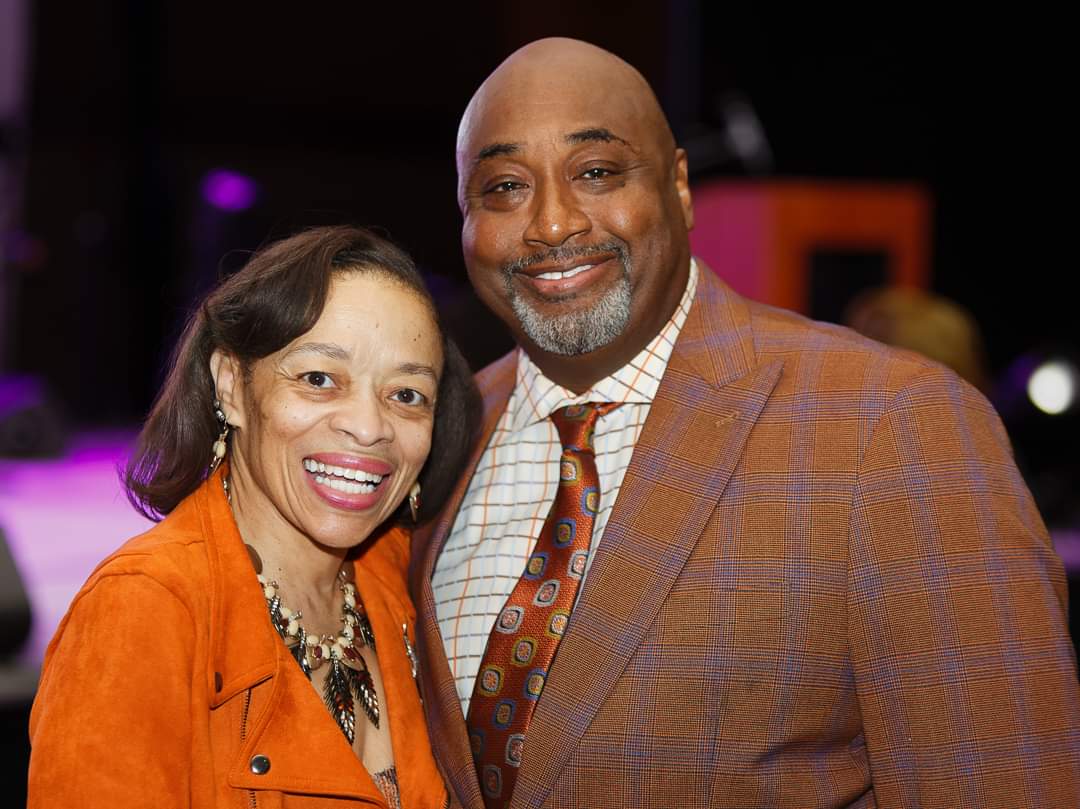
The event provides students with opportunities for education, mentorship and fellowship while connecting them with community partners and entertainment professionals.
Their commitment to service extends beyond filmmaking through the Nadyne G. Johnson Foundation, named in honor of Johnson’s mother. The foundation’s work is deeply personal, as Johnson’s family has been affected by ALS.
Through fundraising efforts connected to film and community events, Johnson and his wife help provide practical assistance to families affected by the disease, including wheelchairs, hospital beds, medication, diapers and other necessities.
For Johnson, the money raised is not about personal profit. It is about giving back.
The same philosophy guides his approach to filmmaking.
He wants young people to understand that creativity can be a career, that the arts belong in their communities and that there are countless ways to build a meaningful life.
His current projects reflect the momentum behind that vision. Johnson says his production work includes multiple completed episodes of Dundrill Heights, with additional episodes in development. He is also working on a Christmas film scheduled for release in December 2027, with plans to include young people who have participated in his film camps.
That may be the most important part of Johnson’s vision: the students are not simply learning about the industry—they are becoming part of it.
His message is intentionally inclusive.
“This is not a Black or white thing,” Johnson says. “This is an all-children’s thing.”
At the heart of his work is a belief that every child deserves access to opportunity—not only in science and mathematics, but also in the arts.
For some, that opportunity may be acting. For another, it may be writing, filmmaking, costume design, music or production.
Johnson’s role is to open the door.
His story is ultimately about what can happen when faith becomes action. A pastor became a filmmaker. A filmmaker became a mentor. A mentor built film camps. And those camps became pathways for young people to discover possibilities beyond the boundaries of what they once thought was achievable.
In Johnson’s world, a camera is more than a piece of equipment. It is an invitation to imagine.
It is an opportunity to create.
And for the young people he serves, it may be the first time someone has looked at them and said:
You can do this, too.
All things reserved, Gumptown Magazine, LLC. Copyright 2026.
